
CAD/BIM Tips & Tricks
6½ Engineering Failures That Started With a Small Warning
24 November 2026
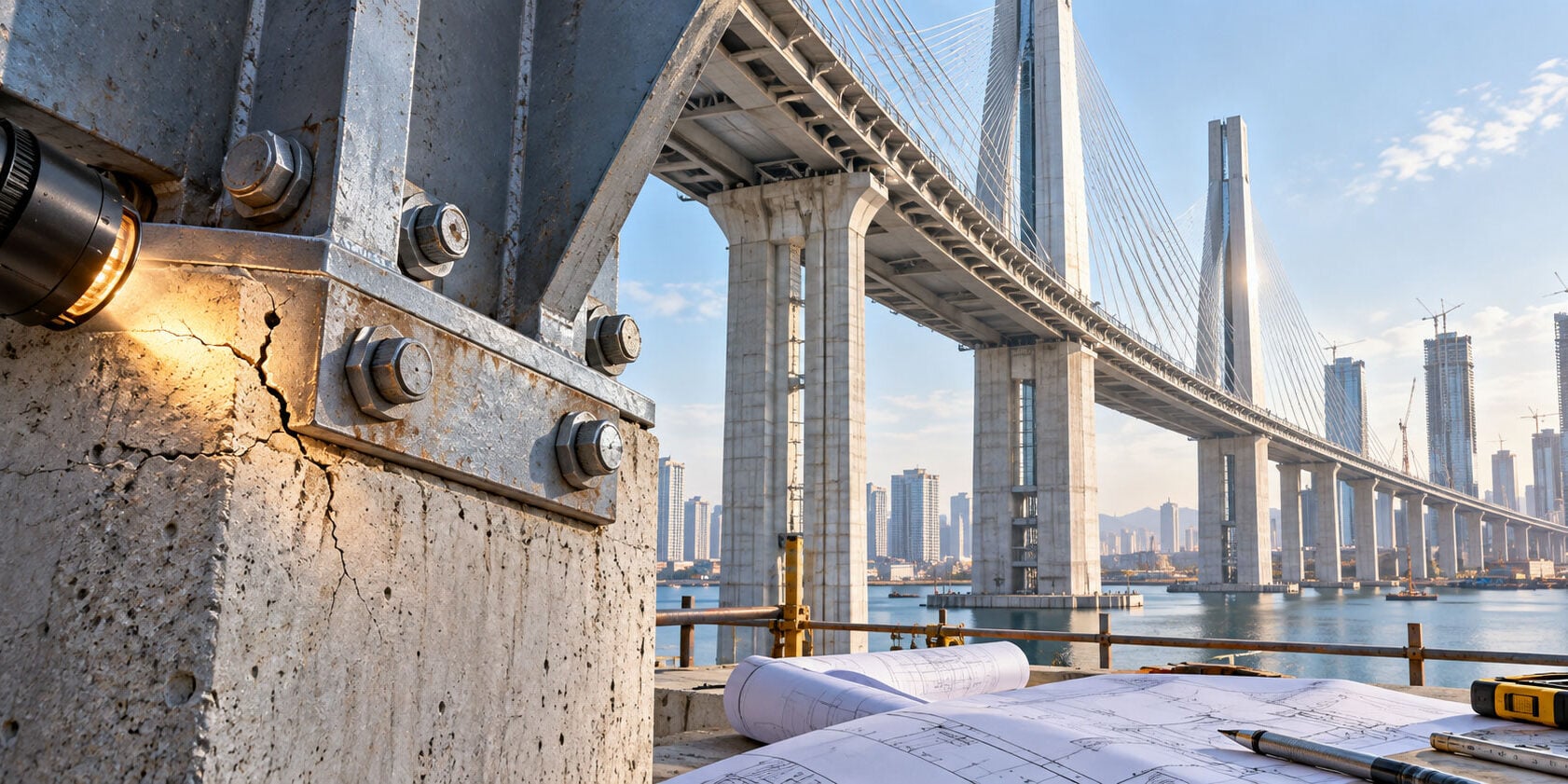
An inspection report recommends repairing corrosion on a bridge leg, but the work doesn’t get done. On another project, engineers gather to discuss severe cracks that have been widening near a critical bridge connection. Elsewhere, a construction revision replaces one continuous hanger rod with two shorter rods, leaving an upper walkway connection to carry the weight of two walkways.
The visible collapse lasted seconds. The structural sequence had been underway for weeks.
These aren’t scenes from a single unfolding disaster. They’re early warnings from three different engineering failures. Six of the cases covered in this article ended in catastrophe. One was caught in time.
The purpose of this article is to examine the warnings that appeared before these events and the decisions that followed, so engineers and design professionals can carry the lessons into their own work. It’s my hope that articles like this one will, in some way, contribute to the prevention of similar catastrophes in the future.
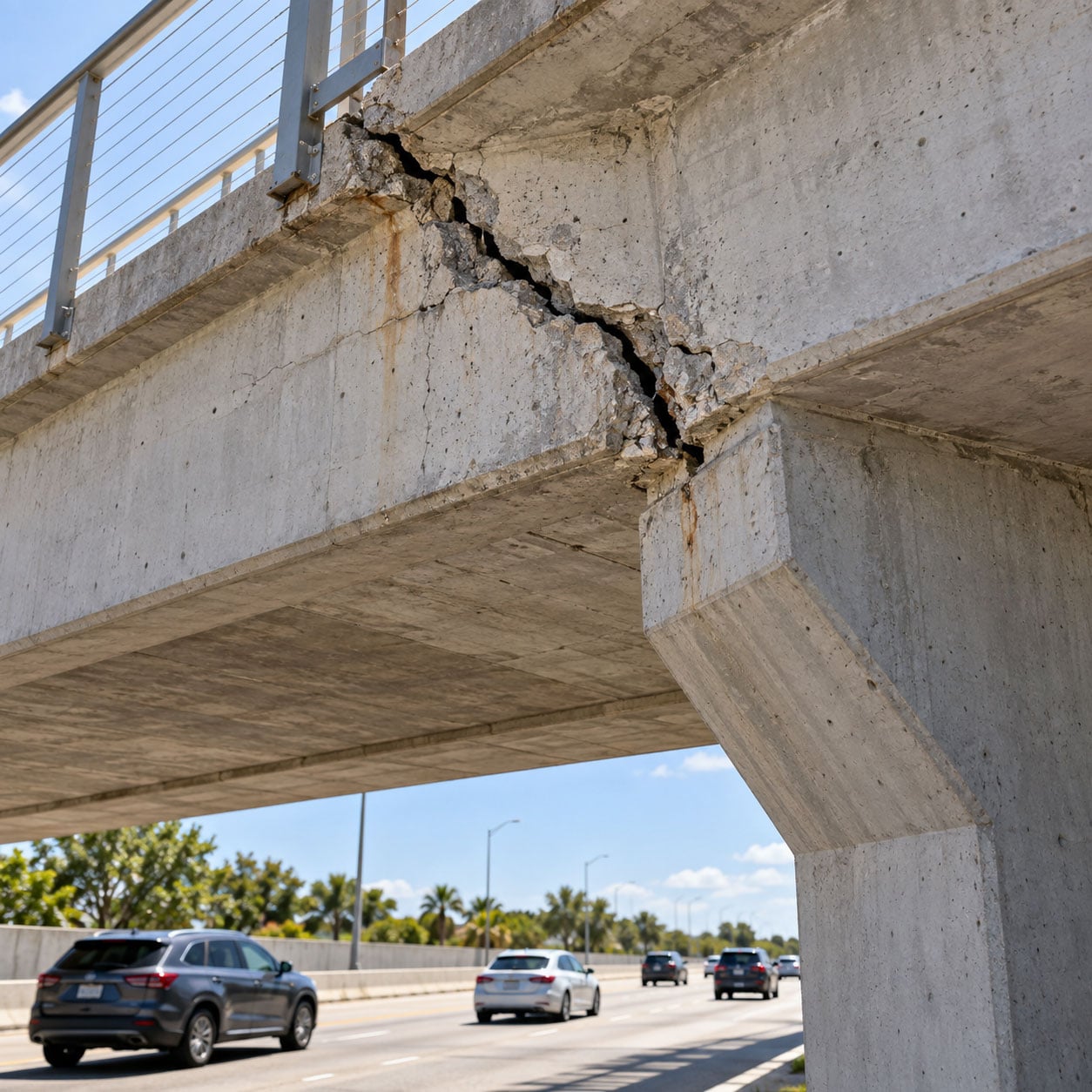
Before the collapse, evacuation or emergency repair, each warning looked like something a project team might encounter on any ordinary working day. And that’s a big part of the problem.
For CAD, BIM and engineering teams, the lesson isn’t that every crack or drawing revision signals catastrophe. It’s that critical information must remain visible as it moves between calculations, models, drawings, reports and people. If a warning is misunderstood, separated from related evidence or left without action, it offers very little protection.
Other than the unthinkable human toll, what unsettles me most isn’t the scale of the final failure. It’s how ordinary the first warning often looked.
From a distance, major engineering failures often look sudden. Up close, many begin with something smaller: an unexplained movement, a calculation that deserves another look or a piece of information that never reaches the person who could’ve acted on it.
These cases illustrate that point.
1. Fern Hollow Bridge Collapse: Repeated Recommendations Until Disaster
Inspection reports had repeatedly recommended maintenance and repairs for Pittsburgh’s Fern Hollow Bridge. The work didn’t happen.
On 28 January 2022, the bridge collapsed into the park below as vehicles, including a bus, were crossing it. The National Transportation Safety Board (NTSB) determined that corrosion and section loss caused the failure of a transverse tie plate on the bridge’s southwest leg. That plate was a fracture-critical member, meaning the structure lacked redundancy if it failed.
The NTSB’s 2024 final report found that the City of Pittsburgh hadn’t acted on repeated maintenance and repair recommendations. It also identified poor-quality inspections, incomplete identification of fracture-critical members, incorrect load-rating calculations and insufficient oversight by the Pennsylvania Department of Transportation as contributing factors. Fern Hollow wasn’t short of information. It was short of decisive action.
A recommendation has no structural capacity. Until someone schedules, funds and verifies the work, it remains nothing more than text in a report.
2. Champlain Towers Collapse: A Failure That Began Weeks Earlier
For years, Champlain Towers South in Surfside, Florida, had shown signs of water intrusion, deterioration and structural trouble. On 24 June 2021, its partial collapse killed 98 people.
Each observation may be accurate on its own while the larger pattern remains invisible.
In technical findings released in June 2026, the National Institute of Standards and Technology (NIST) reported that the collapse process had begun weeks before the tower fell. Two connections between garage columns and the pool deck failed in early June, transferring loads to structural elements already weakened by problems dating back to the building’s design and construction. When part of the pool deck later separated, the failure spread into the tower.
That finding changes the way the event looks. The visible collapse lasted seconds. The structural sequence had been underway for weeks, while the underlying problems had been developing for decades.
Self-healing concrete may eventually help limit microcracking and moisture intrusion, but it can’t compensate for design deficiencies, serious deterioration or ignored warnings.
3. FIU Bridge Collapse: Cracks With Traffic Below
Not every concrete crack means imminent collapse. However, the severe cracking near a critical connection in the partially constructed Florida International University (FIU) pedestrian bridge was anything but routine.
Cracking where two structural members joined the bridge had been documented since 24 February 2018 and had continued to grow. On the morning of 15 March, the engineer of record examined the cracks and presented his analysis during a meeting with the project representatives. The road beneath the bridge remained open. Hours later, the bridge collapsed onto traffic, killing six people.
The NTSB’s final accident report found that design errors had caused engineers to underestimate the demand on the connection and overestimate its capacity. An inadequate peer review failed to catch those errors. The report also found serious failures in the response to the visible structural distress, including the failure to close the road below.
The cracks weren’t merely cosmetic damage appearing on an otherwise sound design. They were physical evidence that the structure wasn’t behaving as the calculations predicted.
When the structure and the model disagree, the concrete gets the final vote.
4. Oroville Dam Spillway Failure: Deterioration Becomes an Emergency
On 7 February 2017, workers discovered damage to the main spillway at California’s Oroville Dam. The situation escalated rapidly.
As the damaged spillway’s capacity became a concern, water flowed over the emergency spillway for the first time in the dam’s history. Severe erosion below that structure raised fears that part of it could fail. This resulted in the evacuation of more than 180,000 people.
Sometimes the warning is a crack. Sometimes it’s a calculation that niggles at your conscience.
The Independent Forensic Team’s 2018 final report identified deficiencies in the spillway’s design and construction, poor foundation conditions and deterioration that had developed over time. It also found a wider failure by the dam-safety community to recognize and address those conditions.
Oroville demonstrates why inspection data can’t be treated as a collection of unrelated maintenance notes. Each observation may be accurate on its own while the larger pattern remains invisible.
5. Hyatt Regency Walkway Collapse: The Detail That Doubled the Load
A connection revision can look remarkably harmless on paper. During construction of the Hyatt Regency hotel in Kansas City, the hanger-rod arrangement supporting two suspended walkways was changed.
The original concept used continuous rods running from the roof through the fourth-floor walkway to the second-floor walkway. The revised detail divided each rod into two, suspending the lower walkway from the one above. That meant the fourth-floor connection had to support both walkways, effectively doubling part of its load.
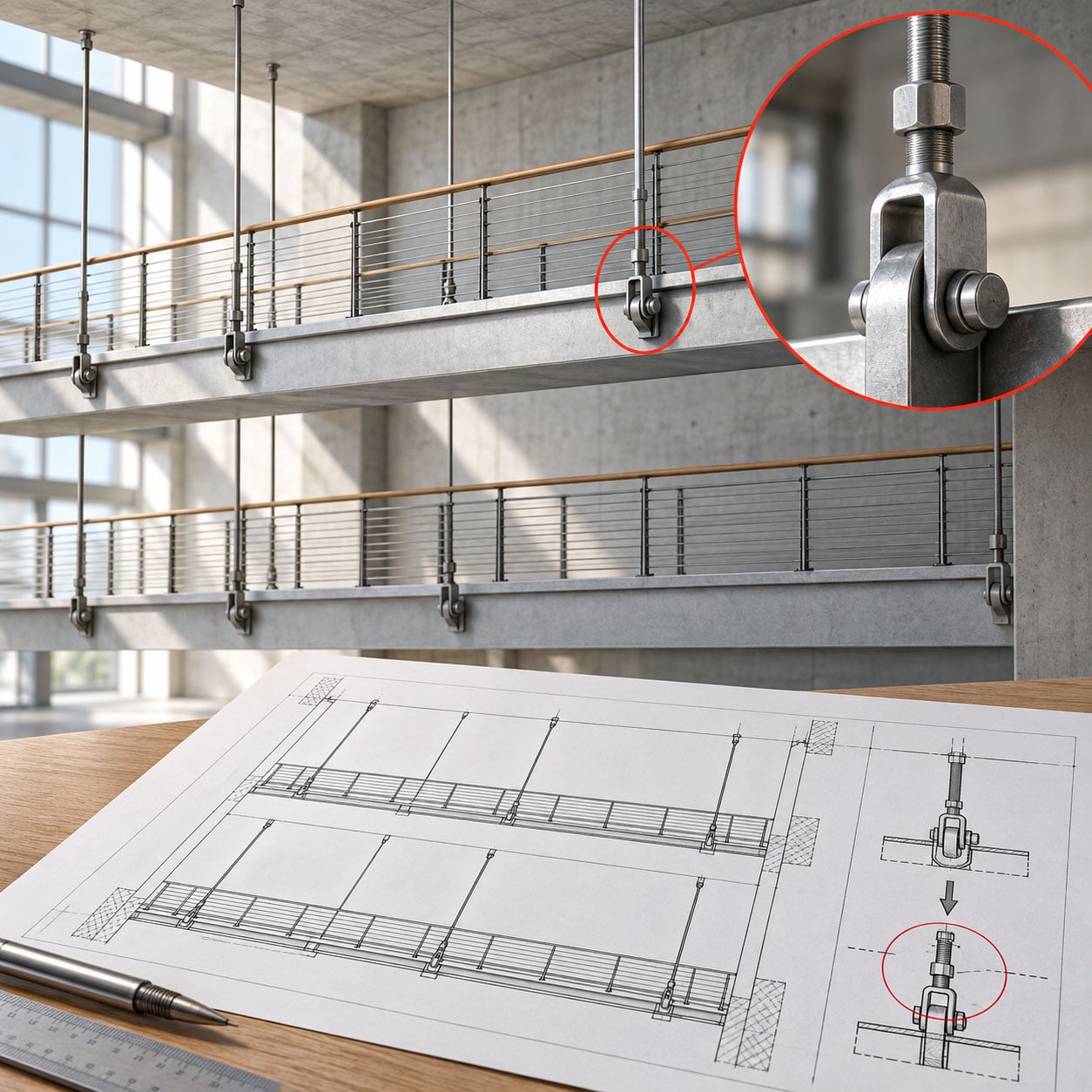
One revised connection can quietly rewrite the forces moving through an entire structure.
On 17 July 1981, the walkways collapsed during a crowded event, killing 114 people. The National Bureau of Standards, now NIST, investigated. Its 1982 report found that the original box-beam connection was inadequate and that the revised hanger-rod arrangement essentially doubled the load on the fourth-floor connections.
The lesson isn’t that drawings shouldn’t change. Sometimes they must. The lesson is that a changed line can represent a changed force.
6. Citicorp Center: The Disaster Prevented by a Second Look
Citicorp Center belongs on this list precisely because it didn’t collapse. Completed in Manhattan in 1977, the tower had an unusual structural system. Its main columns stood at the center of each side rather than at the corners. Soon after completion, structural engineer William LeMessurier revisited how the building would respond to winds striking at an angle.
According to an American Society of Civil Engineers account of the case, the recalculation exposed a troubling vulnerability, made more serious because bolted joints had been used in places where the original design specified welded connections.
The building was quietly reinforced in 1978. Crews worked at night, welding steel plates over critical joints while weather conditions were closely monitored.
Citicorp remains one of engineering’s most famous ethical case studies. The engineer who uncovered the risk chose to confront it directly, urgently and responsibly before anyone was hurt.
Sometimes the warning is a crack. Sometimes it’s a calculation that niggles at your conscience.
7. Tacoma Narrows Bridge Collapse: Movement Everyone Could See
The Tacoma Narrows Bridge didn’t hide its problem. Soon after it opened in July 1940, the deck’s motion in the wind was obvious. Workers nicknamed it “Galloping Gertie.” Engineers tried hydraulic buffers, tie-down cables and other measures, but the movement continued.
On 7 November 1940, the bridge’s usual vertical motion changed into a violent twisting oscillation. A mere four months after the bridge’s opening, the main span broke apart and fell into Puget Sound.
The collapse forced engineers to reconsider how wind interacts with long, flexible suspension bridges. It wasn’t enough to calculate whether the structure could resist a static wind load. Designers also had to understand the aerodynamic behavior produced by the bridge’s shape, rigidity and movement.
A detail that looks minor on screen can change what reaches the drawing set, the contractor and ultimately the finished structure.
They discovered that the twisting motion began feeding on the wind until the oscillation became self-generating. The failure showed that long suspension bridges required much more rigorous aerodynamic study.
The movement was visible. What it meant wasn’t fully understood at the time.
The Warning Isn’t Always the Weakest Part
Across these seven cases, the first warning took different forms. Repeated inspection recommendations weren’t acted upon at Fern Hollow. Long-term structural distress at Champlain Towers South. Cracks at FIU. Deterioration at Oroville. A revised connection at the Hyatt Regency. A recalculation at Citicorp. Movement at Tacoma Narrows.
The common problem wasn’t simply that somebody lacked information. In several cases, people had drawings, reports, calculations or physical evidence that pointed toward danger. But the information wasn’t understood, connected, escalated or acted upon in time.
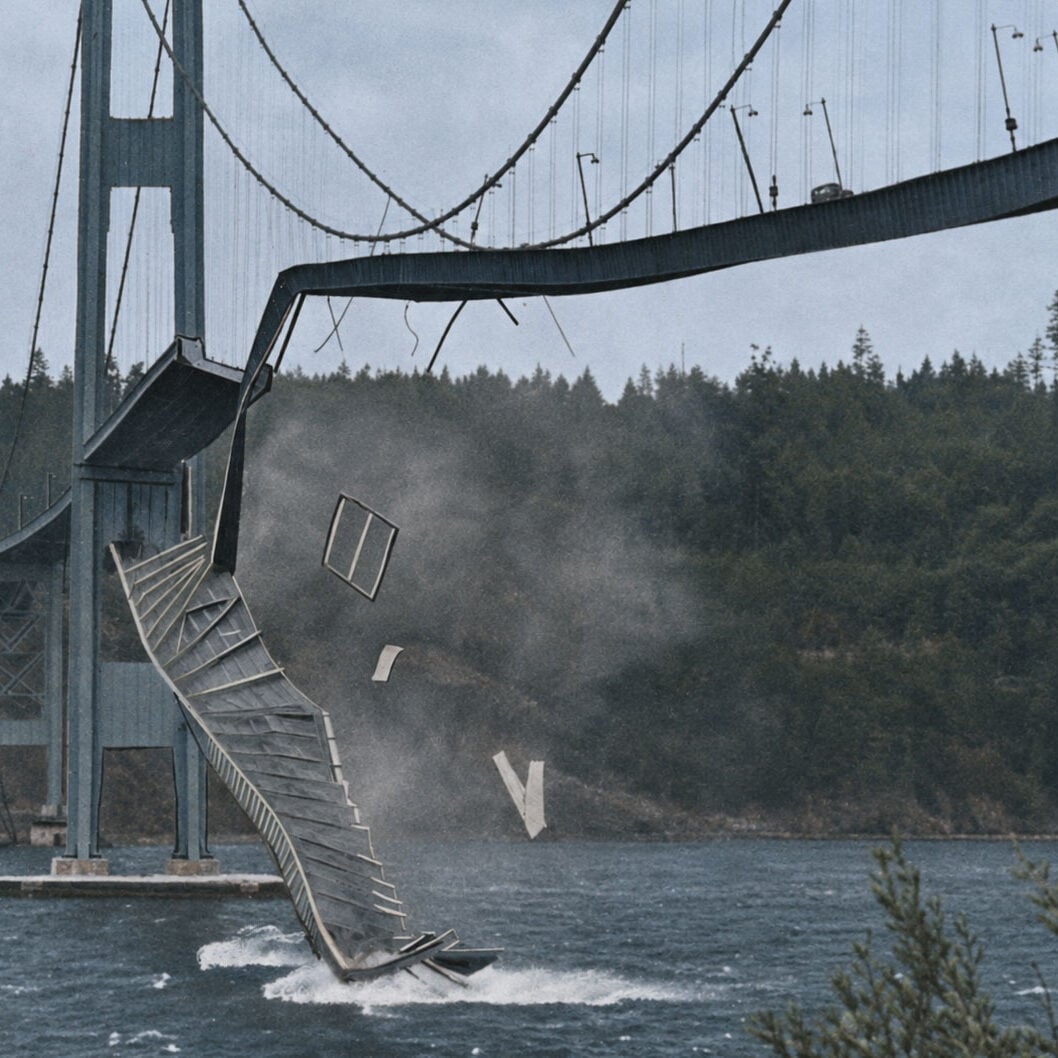
The bridge had moved for months. On 7 November 1940, that movement became catastrophic.
CAD and BIM systems can make design data easier to create, revise and share. Inspection platforms can document conditions with extraordinary detail. None of them can decide that a change is crucial. That still depends on engineers noticing discrepancies, questioning assumptions and making sure the right person sees the warning before it becomes the failure.
Small warnings can also hide inside the design files themselves. As one missing level or layer can demonstrate, a detail that looks minor on screen can change what reaches the drawing set, the contractor and ultimately the finished structure.
The practical lesson for CAD and BIM teams is simple: don’t ask only whether information exists. Ask whether the latest revision is visible, traceable and in front of the person whose decision depends on it. A warning buried in the wrong drawing, model or report offers very little protection.
When a small detail changes, finding it and getting the right information in front of the right people can matter enormously.
By Oscar Albornoz
References:
- Fern Hollow Bridge: https://www.ntsb.gov/investigations/accidentreports/reports/hir2402.pdf
- Champlain Towers South: https://www.nist.gov/news-events/news/2026/06/nist-releases-technical-findings-what-caused-2021-partial-collapse
- FIU Pedestrian Bridge: https://www.ntsb.gov/investigations/AccidentReports/Reports/HAR1902.pdf
- Oroville Dam Spillway: https://www.ferc.gov/oroville-dam-service-spillway-p-2100
- Hyatt Regency Walkways: https://www.nist.gov/publications/investigation-kansas-city-hyatt-regency-walkways-collapse-nbs-bss-143
- Citicorp Center: https://www.asce.org/publications-and-news/civil-engineering-source/civil-engineering-magazine/article/2007/07/william-j-lemessurier/
- Tacoma Narrows Bridge: https://www.fhwa.dot.gov/byday/fhbd1107.htm

Axiom's President
Oscar Albornoz
Feel free to share this article on your social media:
