

CAD/BIM Tips & Tricks
6 Points to Help You Deal With Net-Zero Requirements in CAD/BIM Design
(And How This Will Affect Your Career)
26 November 2025
The world of architecture, engineering, and construction (AEC) used to be fairly predictable: Build it fast, build it strong and try not to break the budget.
But now, we may be in the midst of a shift so massive it makes the move from paper to personal computer look like a simple software update. It’s called the Net-Zero Imperative, and, as an architect, engineer or designer, your digital tools are your greatest asset to achieve compliance in the face of growing requirements. Make no mistake, all this is making your work even more challenging. Later in this article, we’ll cover what this means to you as a designer and suggest some tools that can help.
Net-zero isn’t just about sticking a few solar panels on the roof. It’s a radical, (and increasingly mandated) transformation that you could say is being powered by BIM.
The bottom line? If you’re a professional using Revit®, MicroStation® or similar platforms, simply modeling buildings is often no longer enough. More and more, “green” concepts are being demanded in your designs.
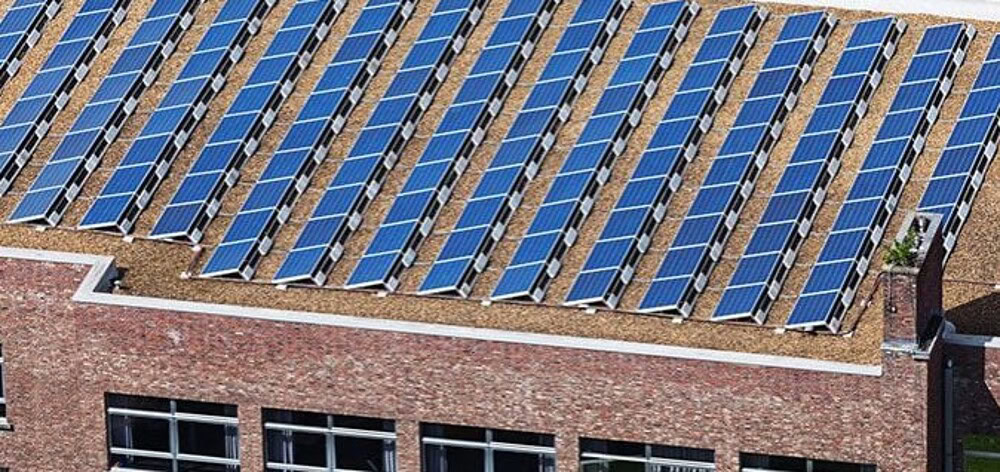
Net-zero is about so much more than a few solar panels on the roof.
But let’s begin with the most fundamental question: What exactly does “net-zero” mean? Before we get into the six factors worthy of your attention in the net-zero arena, we’ll first briefly outline:
- Exactly what net-zero is.
- The two pillars of net-zero.
- Operational vs embodied carbon.
- Global adoption.
If you already know all of this, go ahead and scroll down to Why This Matters to Your Career.
What Does Net-Zero Mean?
Conceptually speaking, net-zero is essentially an operational and economic target where the amount of energy consumed by a building or piece of infrastructure over the course of a year equals the amount of renewable energy created on-site.
It’s easy to dismiss the subject as a fad or trend, but whether you’re in favor of it or not so much, globally, net-zero mandates are on the rise.
Think of it as a balance sheet for energy, where the goal is to zero out the annual consumption.
In the construction industry, “the net-zero imperative” refers to the need to eliminate or significantly reduce carbon emissions from the built environment by achieving net-zero buildings and practices.
The Two Pillars of Net-Zero
According to net-zero theory, achieving net-zero relies on two interconnected strategies:
A. Radical Efficiency (The Consumption Side)
This involves design strategies that reduce the amount of energy a structure needs for day-to-day operations, such as HVAC, lighting and equipment. This is achieved through:
- Passive Design: Optimizing building orientation, maximizing daylighting, utilizing natural ventilation and designing effective shading elements.
- High-Performance Envelope: Specifying superior insulation, airtight construction (reducing air leakage) and using high-performance windows to prevent heat loss or gain.
- Systems Optimization: Installing ultra-efficient MEP (Mechanical, Electrical and Plumbing) systems (such as HVAC, lighting, plumbing) that often include smart sensors, variable refrigerant flow (VRF) and LED lighting controls.
B. On-Site Generation (The Production Side)
Once the structure is as energy lean as possible, the various net-zero initiatives require that the remaining energy demand must be met with clean, renewable sources generated on the property or within the project’s local utility framework. (This statement is very broad and leads to all kinds of debates, but such are not the topic of this article.)
A 2024 rule requires the federal government to achieve net-zero emissions in its 300,000 buildings by 2045.
- Photovoltaic (PV) Systems: Solar panels are the most common solution, placed on roofs or integrated into façades (known as Building-Integrated Photovoltaics, or BIPV).
- Geothermal: Utilizing the earth’s own internal temperature for highly efficient heating and cooling.
- Wind: Smaller-scale turbines or integrated wind designs where applicable.
The Elephant in the Concrete Room: Operational vs. Embodied Carbon
As a professional, it’s important to understand that the definition of “net-zero” is rapidly expanding beyond just energy.
Operational Carbon: The Classic Net-Zero
For years, when we talked about a “green building,” we focused on operational carbon — the energy a building starts guzzling as soon as the tenants move in (lights, HVAC, coffee machines, computers, you get the idea). That was the easy part.
Operational carbon is the energy used to run the building once it’s complete. When most people say “net-zero,” this is what they’re talking about. It’s measured over the lifespan of the building.
Embodied Carbon (The New Frontier)
Embodied carbon is the current hot topic and could be thought of as the carbon that hides in plain sight. This is the carbon dioxide equivalent (CO2e) that is baked into a project before a shovel even hits the dirt. It measures the emissions from extracting raw materials, manufacturing cement, smelting steel and shipping a truckload of piping halfway around the world.
The new idea being touted is that meeting long-term carbon goals requires achieving not only net-zero operational carbon, but net-zero embodied carbon as well.
The AEC industry is moving toward Whole Life Carbon (WLC) assessment, which measures both operational and embodied carbon to provide a full picture of a project’s environmental impact from cradle to grave.
Net-Zero Mandates Around the World
It’s like getting a nutritional label for your building materials.
Yes, it’s easy to dismiss the subject as a fad or trend, but whether you’re in favor of it or not so much, globally, net-zero mandates are on the rise. Depending on who your clients are and in what part of the world, these mandates will affect your design work to a greater or lesser degree. In some cases, the effect on your work will be substantial. Toward the end of this article, we cover some tips and some tools that can help you navigate all this.
United States
While there is currently no national mandate for private construction, the federal government is requiring net-zero practices for all of its own buildings. Individual states, counties and cities increasingly have their own regulations.
- Federal buildings: A 2024 rule requires the federal government to achieve net-zero emissions in its 300,000 buildings by 2045.
- California: The state has set its own net-zero targets for new residential, public and commercial buildings.
- New York: State law includes economy-wide net-zero mandates by 2050.
European Union
The EU is at the forefront of mandatory net-zero regulations.
- For new construction:
- New publicly owned buildings must be zero-emission by 2028.
- All other new buildings must be zero-emission by 2030.
Every ounce of material saved is carbon not emitted.
- For existing buildings: The Energy Performance of Buildings Directive (EPBD) has set minimum energy performance standards to renovate the worst-performing buildings.
- Phasing out fossil fuels: The EU aims to phase out fossil fuel boilers (commonly used for both residential and district heating) by 2040.
United Kingdom
The UK has established legally binding net-zero targets for the entire country by 2050.
- New standards: The new UK Net Zero Carbon Buildings Standard, which began its pilot phase in late 2024, provides a framework for vigorously defining and verifying net-zero compliance for new and existing buildings.
- Upcoming regulations: The transition to the Future Homes Standard and Future Buildings Standard — anticipated by December 2026 — will require new buildings to produce significantly less carbon emissions.
Australia
The land down under has a legally mandated net-zero target of 2050, with a two-phase approach.
- 2035 Target: The government recently introduced an ambitious target of 62–70% emissions reduction by 2035 compared to 2005 levels, which is intended to put the country on track for its 2050 goal.
- 2050 Target: Australia is legally committed to reaching net-zero emissions by 2050.
Asia
Many countries in Asia have net-zero requirements, such as Japan, China, South Korea, New Zealand and Taiwan. However, progress, enforcement and timelines vary widely, with targets ranging from 2030 to 2070.
Africa
Several African countries already have net-zero requirements or are developing them. The following countries have net-zero plans or targets:
Clash detection resolves conflicts in minutes on your screen. Fixing on-site takes days and creates a pile of expensive, wasteful scrap.
- Nigeria has a 2060 net-zero target, which is supported by its long-term vision and a Long-Term Low Emission Development Strategy (LT-LEDS).
- South Africa has a goal to reach net-zero by 2050, with plans in place through various initiatives to develop a transition framework.
- Rwanda has integrated net-zero action into its national development plans, which include goals like achieving 60% renewable energy by 2030.
- Egypt, Ethiopia, Kenya, Ghana and Senegal are among the countries that have established domestic emissions pathways for achieving net-zero, often with a focus on renewable energy expansion and other carbon-impacting strategies.
- Namibia has a Long-Term Low Emission Development Strategy (LT-LEDS).
Across Africa, various countries are approaching net-zero requirements by expanding “renewable energy” (wind and solar), reforestation, mangrove restoration, sustainable forest management and implementing bylaws for new buildings to be net-zero and existing buildings to achieve net-zero performance by a targeted date. And much of it will require BIM design.
Now, let’s get into the six points to bear in mind when considering net-zero.
1. Why This Matters to Your Career
- Regulatory Compliance: Jurisdictions worldwide are adopting stricter energy codes (for example, California’s Title 24 and various city-level mandates) and increasingly mandating BIM for compliance verification.
- Technical Skill Requirement: Proficiency in energy modeling, performance analysis and data management within BIM platforms such as Revit and MicroStation (which has extensive BIM features and capabilities), is fast becoming a baseline requirement for engineers and designers.
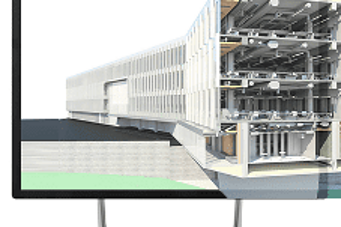
Revit is a key tool for easier net-zero planning.
- Project Opportunity: Government and private clients (particularly institutional and corporate real estate) now often require net-zero or highly sustainable certification (such as LEED or Passive House) as a benchmark.
2. BIM: Your New AEC Carbon Calculator
As we all know, traditional 2D CAD treated a column as a few lines and a hatch pattern. BIM treats that same column as an intelligent database entry with material specifications, volume and a manufacturer ID. This data richness is precisely why BIM platforms are now the industry’s not-so-secret weapon for Life Cycle Assessments (LCAs). New, integrated tools can read your BIM model and instantly calculate the embodied carbon footprint. It’s like getting a nutritional label for your building materials. And it has some benefits.
- Rapid Design Decisions: A structural engineer can now instantly compare the carbon impact of a concrete foundation versus a recycled steel one. This moves the sustainability issue from a philosophical debate into the practical design arena. No more guessing games — just data.
- Waste Not, Want Not: Because BIM enables precise quantity take-offs, it virtually eliminates material over-ordering. Less scrap metal and fewer unused concrete forms mean less waste, less money down the drain and less unnecessary embodied carbon. A win-win.
3. The Application of Net-Zero for DOTs
It’s not just buildings. Many Departments of Transportation (DOTs) are applying the same rigorous analysis to massive infrastructure projects. Building a highway takes a lot of asphalt and cement, two carbon heavy-hitters.
Engineers using civil design tools such as MicroStation, OpenRoads™, OpenBridge™ and AutoCAD® Civil 3D are focusing on:
You’re not just designing structures that look good and last. You’re designing structures that must comply with increasing net-zero mandates and new regulations.
- Pavement Physics: Modeling alternatives like low-carbon concrete or highly recycled aggregates.
- Structural Efficiency: Optimizing bridge and overpass designs to use the minimum volume of material necessary — because every ounce of material saved is carbon not emitted.
4. MEP’s Moment: Powering Up the Sustainable Grid
The MEP sector is on the front lines of the operational carbon war. They’re tasked not only with making systems run efficiently but with integrating green power sources into the fabric of the building.
Simulation: The Digital Dress Rehearsal
Trying to design a high-performance HVAC system without BIM is like trying to assemble IKEA furniture without the instructions — it’s likely to be a stressful disaster. The complexity of today’s systems demands precision.
- Right-Sizing Saves the Day: MEP engineers use their BIM models to run sophisticated energy simulations. They can predict how the insulation, window type and even the building’s orientation will affect heating and cooling needs. This allows them to right-size all the equipment. Systems that are perfectly sized don’t have to strain, which saves energy and ensures comfort.
- Clash, Boom, Bang: In a high-density ceiling space, a duct, a pipe and a cable tray are destined for a head-on collision. Clash detection (a staple in Revit and other similar platforms) solves these problems digitally. Resolving a conflict on a screen takes minutes. Fixing it with a blowtorch on-site takes days and creates a pile of expensive, wasteful scrap.
Integrating the Green Juice
The transition to green power is turning MEP teams into mini-utility planners.
- Solar Optimization: The BIM model is like a sundial. Architects use it to perform precise solar studies to place photovoltaic panels at the optimal angle, ensuring maximum energy harvest. MEP then uses the model to route the inverters, conduits and battery storage without interference.
- The Digital Twin Advantage: Post-construction, the BIM model often graduates into a digital twin — a virtual replica layered with real-time data from IoT sensors. This allows facilities teams to continuously monitor the building’s energy draw and proactively adjust systems. If the AC is spiking in the West wing, the digital twin immediately alerts the team, preventing energy waste before it becomes a problem.
5. Digital Tools: More Than Just Drawing
Globally, the entire net-zero issue is a massive, multi-disciplinary exercise in data coordination, where software platforms become the common language.
Revit
Revit is essentially the central command for this transformation. Its strength lies in its ecosystem and its ability to handle both design and fabrication data:
- Seamless Analysis: The direct link between the Revit model and external energy analysis tools (like Insight) means feedback is practically instantaneous.
- Off-Site Assembly: Revit’s ability to create highly detailed, fabrication-ready models means more components can be built in a controlled factory setting and delivered to the site ready to snap into place. This “lean construction” approach slashes on-site waste and construction-related carbon emissions — a win for the bottom line and carbon compliance.
MicroStation
In the world of massive infrastructure, MicroStation and its complementary products (OpenRoads, OpenBridge and more) are the backbone.
- Geospatial Context: MicroStation excels at handling massive datasets and aligning them with real-world geographical coordinates. This is vital for planning sustainable infrastructure such as high-voltage transmission lines, utility corridors or the foundation for an entire solar farm.
- Infrastructure Twins: For DOTs, the models built in MicroStation evolve into massive digital twins, allowing teams to track and optimize the energy consumption of street lighting, traffic controls and other high-demand operational systems across an entire metropolitan area.
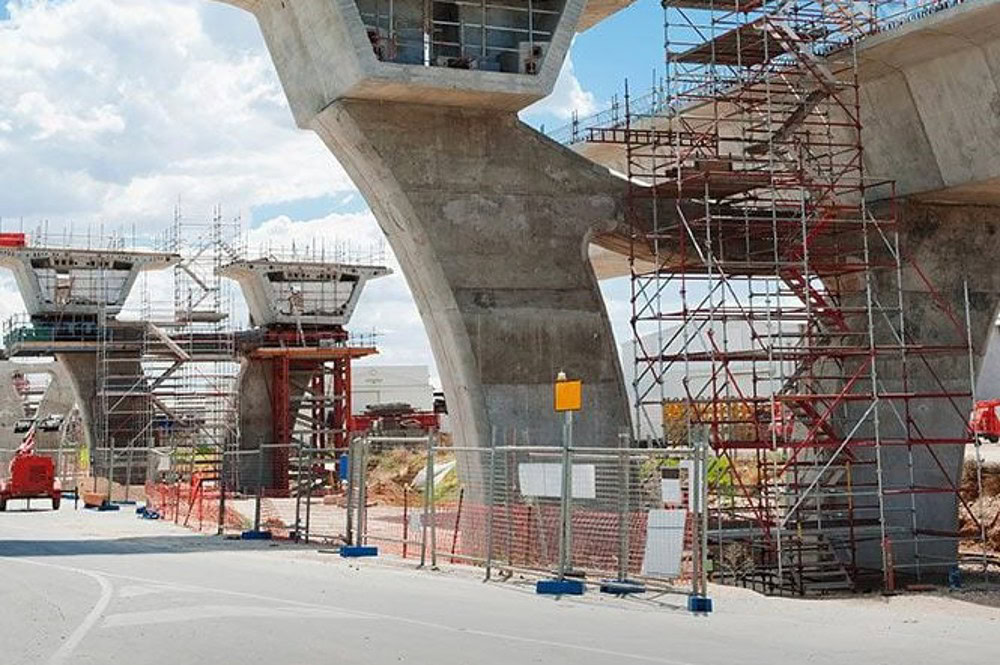
MicroStation is great for handling massive datasets that align with geographical coordinates.
AutoCAD
Let’s give a nod to an American classic. AutoCAD remains crucial for specialized detailing and universal documentation.
- Detailing Matters: A complex, sustainable design can fail if the construction is sloppy. AutoCAD ensures that critical, low-carbon details — like air barriers and thermal breaks — are standardized and communicated clearly to everyone on-site, acting as the final, clear instruction sheet for sustainability compliance.
- Interoperability: The AEC industry still relies on a hybrid workflow. The ability of BIM platforms to cleanly export AutoCAD files ensures that data — and the embedded sustainability intent — isn’t lost when moving between systems.
6. AI and the Final Frontier
If BIM got us from 2D drawings to smart 3D models, AI is taking us from “smart” to genius.

Net-zero gets easier with AI contribution.
- Generative Design: Imagine an AI that can test literally thousands of building shapes and material combinations overnight, scoring each one on its energy consumption and embodied carbon. That’s Generative Design. It allows us to find the single most sustainable design faster than any human team could, eliminating endless hours of manual optimization.
- The Cloud as the Conference Table: Finally, none of this is possible if teams are working in isolation. Cloud platforms and Common Data Environments (CDEs) ensure that every discipline — architecture, engineering and MEP — is collaboratively working on a single source of truth. When the structural engineer updates a beam, the MEP engineer sees it instantly. This level of coordination is the ultimate hack for preventing costly, carbon-wasting mistakes.
How to Zero Out Time-Eating Tasks
Every design platform has certain quirks that result in users spending a great deal of time editing or tweaking details that could virtually be automated.
Think of getting the formatting of an Excel™ or Word™ import just right in an instant. How about updating sheet numbers or title blocks across an entire project? You’ve already got a lot on your plate, so Axiom has built tools to handle these types of mundane, repetitive tasks — so that you don’t have to.
Whether you’re a MicroStation, Revit or AutoCAD user, there are time-saving solutions, purpose-built just for your platform. Call 727-442-7774 to discuss your situation with a CAD/BIM consultant or chat with us online at AxiomInt.com.
The bottom line for AEC, MEP and DOT professionals is that your job has expanded. You’re not just designing structures that look good and last. You’re designing structures that must comply with increasing net-zero mandates and new regulations. With time-saving tools at the ready for you, let us help you build your best.

Time-saving tools mean more time for net-zero design.
