
CAD/BIM Tips & Tricks
Construction Robots and the Future of BIM
1 September 2026
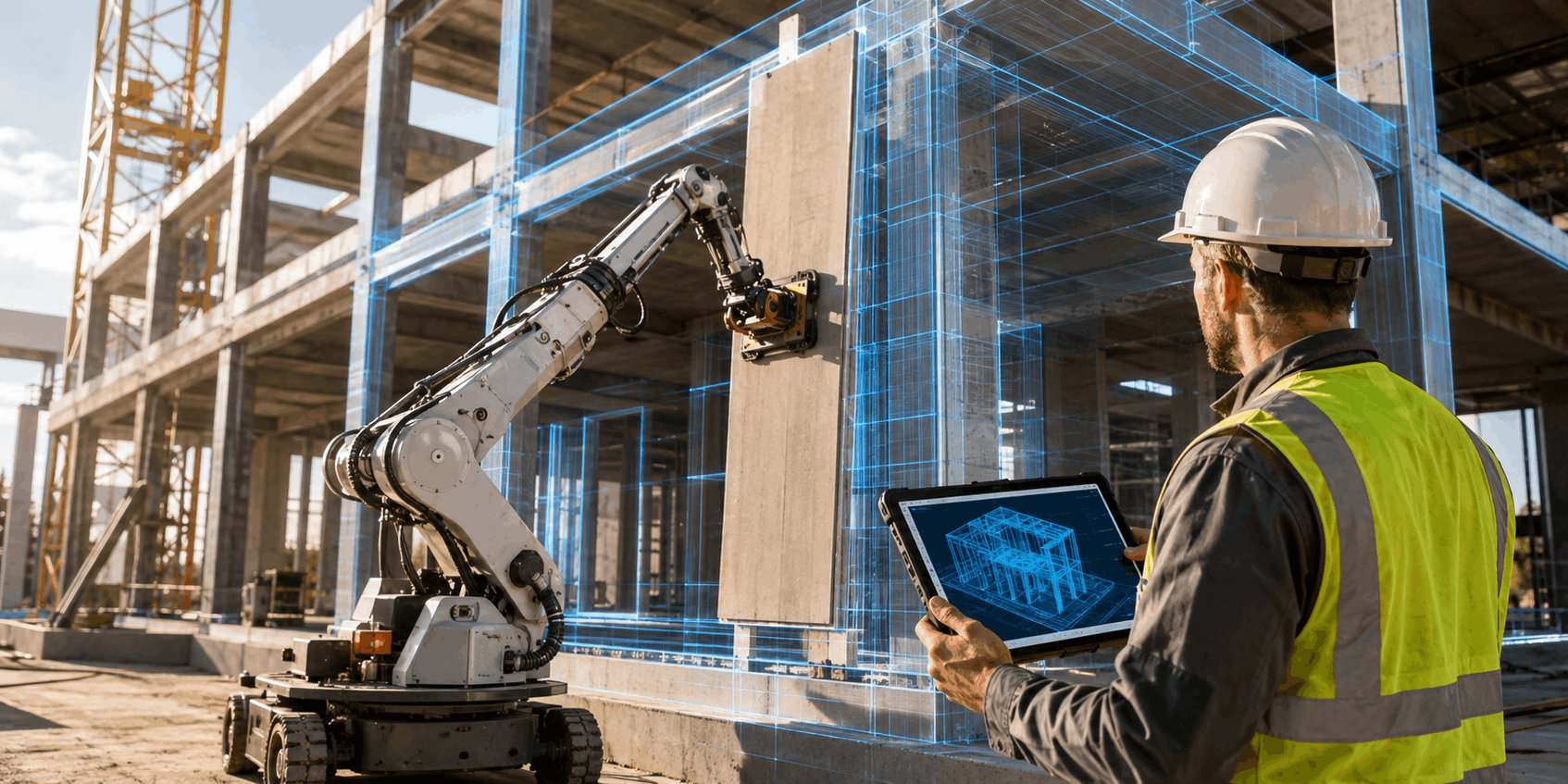
Picture a framing crew that never complains about repetitive tasks, never strains its back or gets into an argument about last night’s game. Imagine a crew that can lift heavy panels, accurately place components and repeat the same fastening operation all afternoon without losing concentration for a split second.
Now imagine that it also has no common sense.
That combination explains both the promise and the limits of construction robotics. Robots are becoming more capable, but a jobsite isn’t a controlled factory floor. It shifts by the hour. Materials arrive late. Weather changes. Temporary workers appear. Three trades need the same patch of floor, and someone parks a pallet exactly where a robot planned to travel.
That combination explains both the promise and the limits of construction robotics.
The future of construction is more likely to bring a partnership between robots that are good at repetition and people who notice when reality has ignored the plan. That partnership begins in the CAD files, BIM models and project information that tell the robot what to build.
A New Laboratory for an Old Industry Problem
In August 2026, Autodesk® and the University of Florida announced the opening of the Autodesk Design and Make Laboratory, a robotics facility dedicated to industrialized construction. Autodesk provided a $1 million donation for equipment, renovations and technical support.
An estimated 41% of the current construction workforce will be at or near retirement age by 2031.
The lab was created in response to two very real problems. According to Florida Realtors, Florida faces a shortage of more than 121,000 homes and rental units. At the same time, an estimated 41% of the current construction workforce will be at or near retirement age by 2031. Robots are one possible solution, especially when they extend the capacity of skilled workers.
The University of Florida team is developing collaborative robots, commonly called cobots. These machines are intended to perform heavy, repetitive or injury-prone work such as framing walls and assembling panels, while humans remain responsible for quality, judgment and hands-on decisions.
That division of labor makes sense. A machine can lift the 400th panel with the same enthusiasm it brought to the first. A human is better equipped to decide why panel 401 doesn’t fit and whether the problem lies in the component, the layout or the model.
Why Construction Is Harder to Automate Than Manufacturing
Industrial robots have succeeded in factories because factories are specifically designed for repeatability. Workstations stay put. Materials arrive in known orientations. Lighting, access and floor conditions can be controlled. The machine’s surroundings are part of the production system.
A live jobsite changes by the hour.
Its geometry evolves. Work zones overlap. Dust can interfere with sensors. Uneven ground affects movement and positioning. A robot may encounter people, tools, cables, lifts, empty elevator shafts and temporary obstructions that didn’t exist when its route was first planned.
Even a capable machine must know its position within the design coordinate system, recognize the correct component, use approved information and move safely around people. It must also determine whether installed work matches the model closely enough to go ahead with the next task in the sequence.
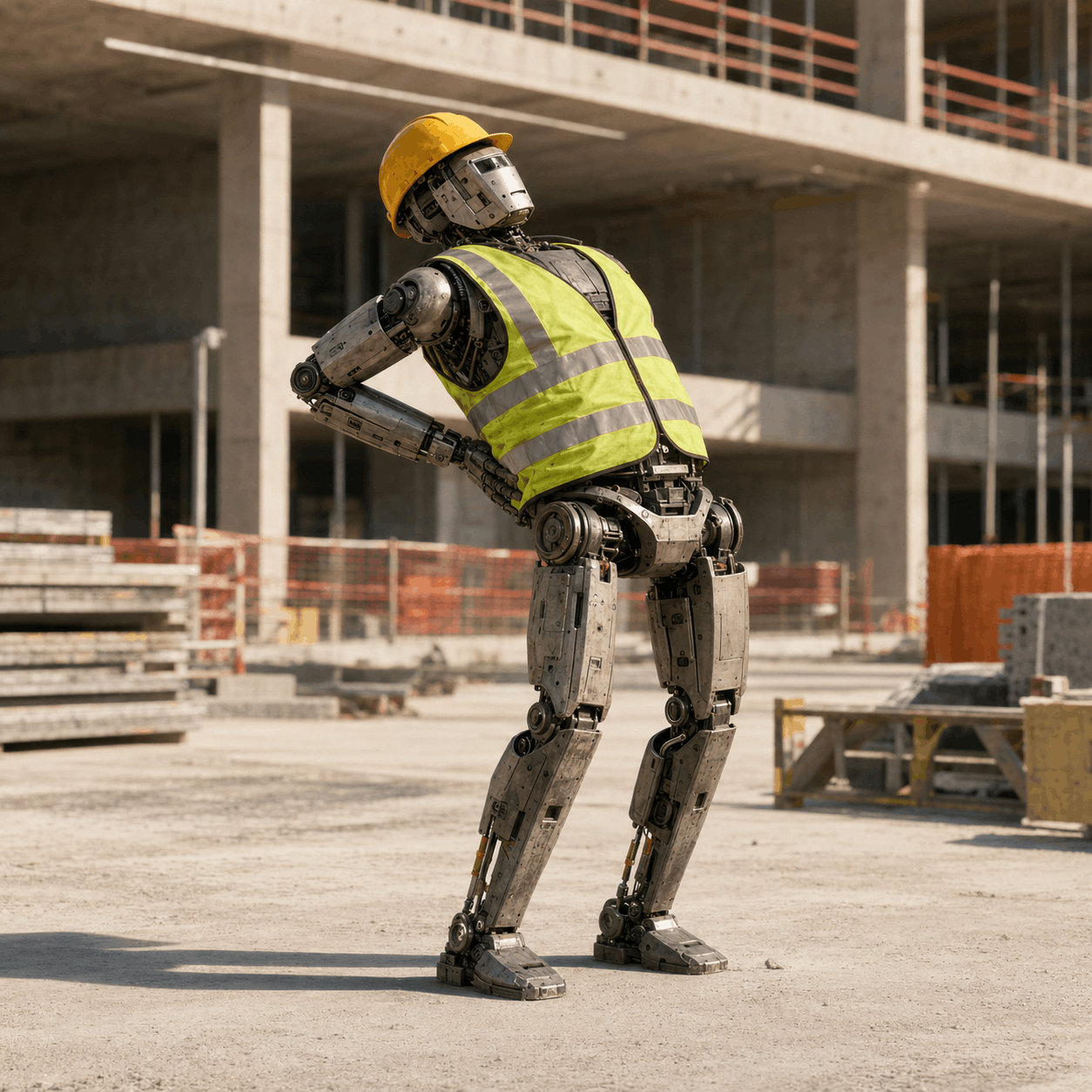
This is why full autonomy is harder than automating a limited task. A robot that drills a repeatable layout, scans progress or assembles panels in a controlled setting has a manageable assignment. A general-purpose Frankenbuilder, expected to interpret every surprise and construct the whole building, would be far more ambitious. (But would it need a hard hat?)
Industrialized Construction Gives Robots a Home-Field Advantage
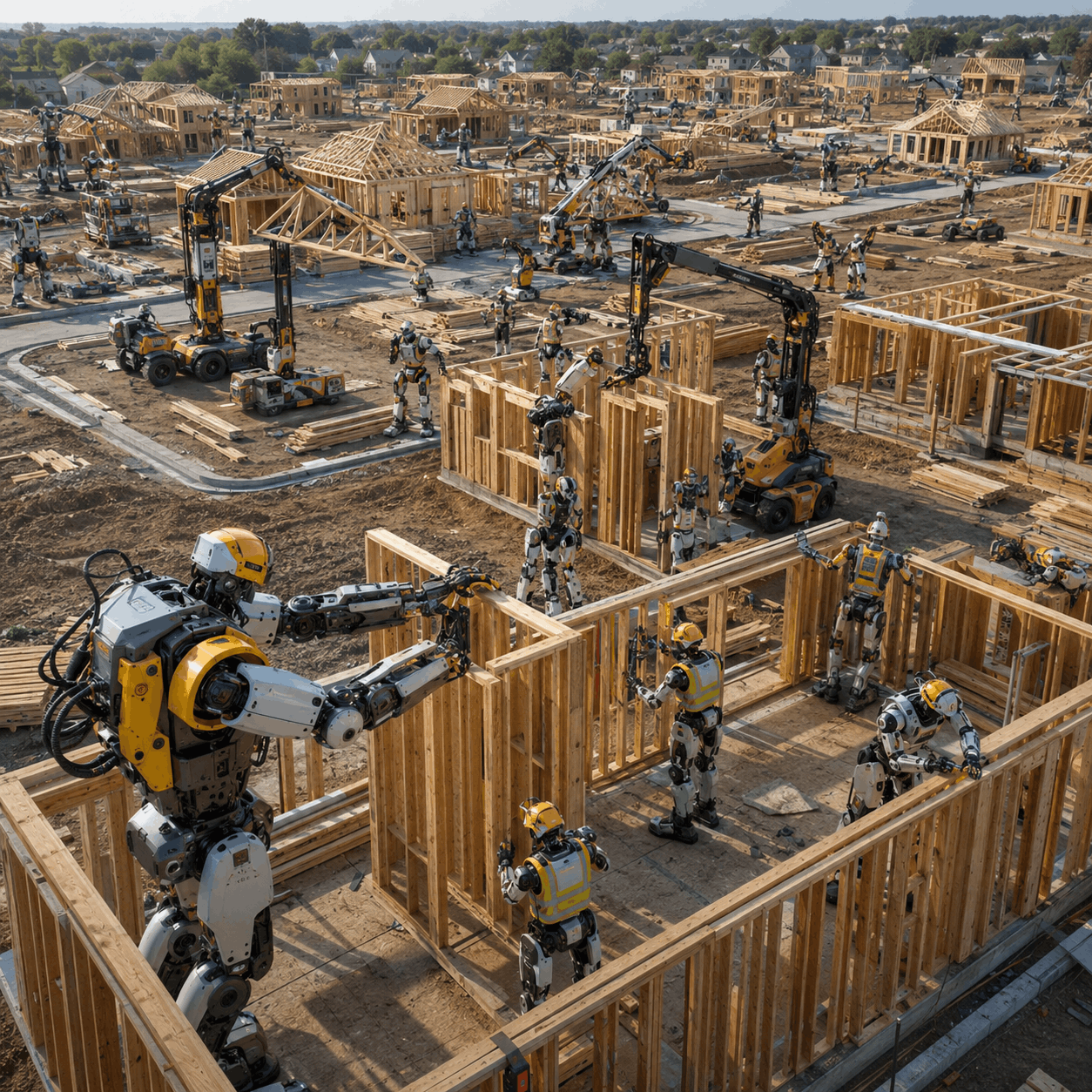
Industrialized off-site construction gives robots a controlled environment. Teams can produce walls, panels or modules using repeatable processes and then transport the completed components to the construction site for installation.
Early tests have suggested that robotic systems could eventually frame sets of houses in a weekend rather than over several months.
Buildings still have project-specific geometry, site conditions, codes, tolerances and interfaces. Off-site production places selected work in surroundings where automation is easier to supervise.
At the University of Florida lab, early tests have suggested that robotic systems could eventually frame sets of houses in a weekend rather than over several months. That’s a promising research direction, but not yet a universal construction schedule.
The technology is still moving through testing and simulation toward possible field implementation. Real-world deployment must also account for safety, transport, sequencing, inspection, maintenance, cost and the complexity of real projects.
BIM Becomes a Set of Machine Instructions
Construction robots need more than geometry. They need usable, current and sufficiently detailed information about components, locations, orientation, sequence and acceptable tolerances.
That’s where BIM becomes more than a coordination model or a visual aid. It can help form the digital basis for robot planning and execution.
One University of Florida project combines computer vision with digital twins modeled in Autodesk Fusion. The aim is to help robots interpret a design and translate it into physical assembly. The digital representation describes the intended result while cameras and sensors help the machine understand what’s actually in front of it.
The BIM model may say that a stud belongs at a precise coordinate. The robot must establish its own position, identify the correct stud, locate its intended placement and account for physical variation on a live jobsite. Survey control, calibration, tolerances and feedback from the field connect design intent to reality.
A robot can’t read a BIM model the way an experienced superintendent reads drawings. Model elements created for coordination, documentation or estimating may lack the fabrication detail, sequencing data or machine-readable rules required for automated work.
Before a BIM model can guide a robot, somebody must decide which information is authoritative, how it will be translated, and when the machine must stop and ask for help.
Bad Data Doesn’t Improve When You Add Motors
Automation increases the value of dependable project information because it acts on that information quickly and consistently. Unfortunately, it can also repeat an error with the same speed and efficiency.
Suppose a component is misidentified, a reference is missing or an outdated model remains in the workflow. A person may notice that something looks wrong and pause. A machine may execute exactly what it was given. The result isn’t digital transformation. It’s a very expensive way to manufacture the same mistake several times over.
Anyone who uses AI or LLMs regularly knows that their output still needs to be checked for accuracy. The same principle applies to cobots. Automation should never be confused with infallibility.
Teams preparing for increased automation will need heightened control over:
- Model versions and approvals.
- File references and dependencies.
- Coordinates, units and orientation.
- Naming and classification conventions.
- Constructability and fabrication detail.
- Design changes and field updates.
- Tolerances and acceptance criteria.
- Responsibility for releasing information to automated systems.
None of these concerns is new. Robotics simply raises the stakes. A muddled level name may once have annoyed a CAD manager. In a robot-led workflow, ambiguous or outdated information can affect the physical outcome on-site. And that gets expensive fast.
The Human Role Moves Up the Decision Chain
Construction robotics will change some jobs. It’ll also create demand for people who can connect design knowledge, construction experience and digital systems.
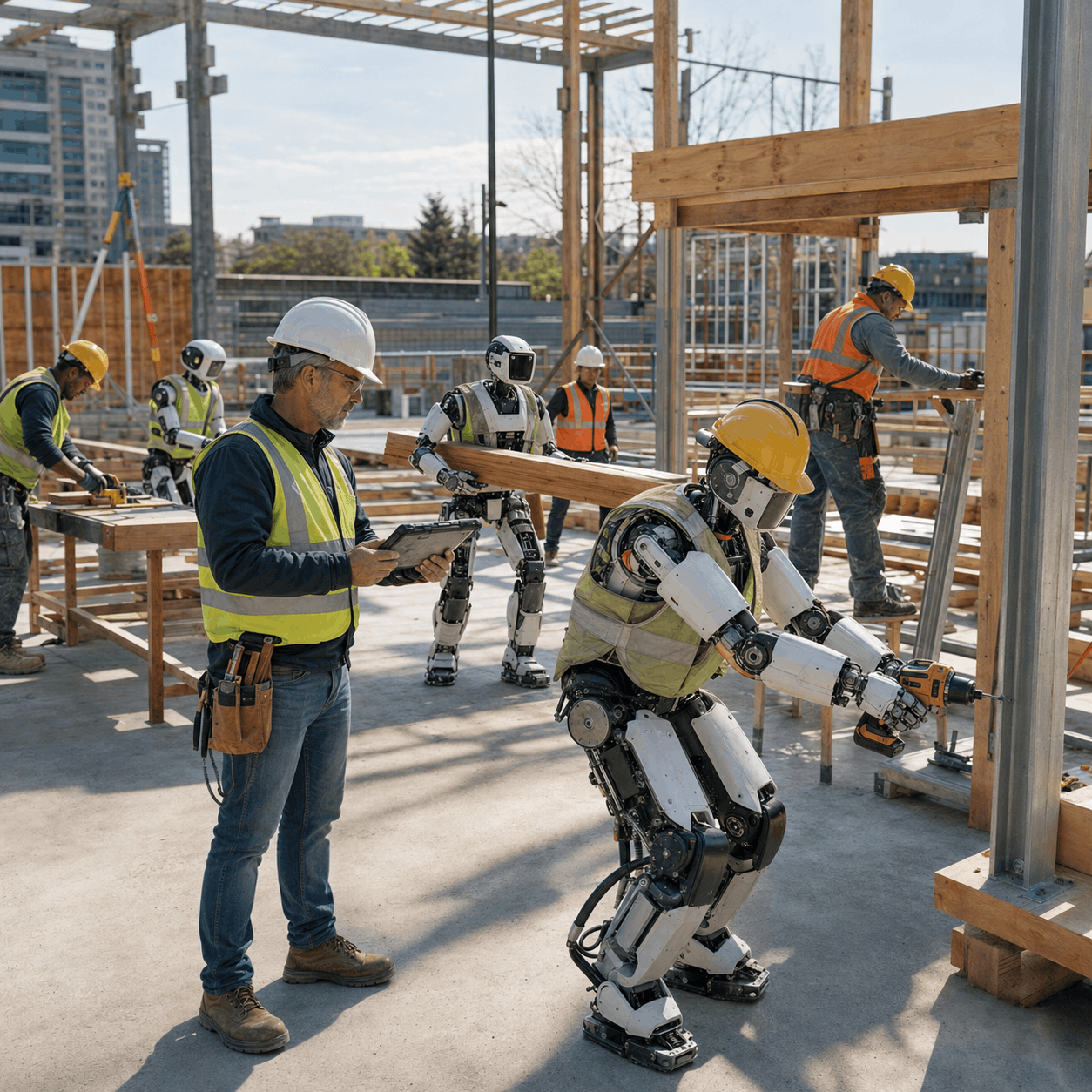
A robot can do a million things perfectly. Human judgment isn’t one of them.
Someone must prepare and validate the model. Someone must plan the robotic task, calibrate the equipment and establish safe operating limits. Someone must compare completed work with design intent. When conditions depart from the assumptions, a human must decide whether to adjust the process, revise the model or stop work.
These aren’t merely software duties. A technically perfect instruction can still be a poor construction decision. The craft doesn’t vanish. Human expertise handles exceptions, risk and judgment while machines provide strength, precision and endurance.
You keep your hard hat. And you likely acquire a tablet, a scanner and a robot that needs firm boundaries. If it sounds like jobsite babysitting, that’s because it kind of is, but at least you’re not doing the heavy lifting anymore.
CAD and BIM Quality Become Field Performance Issues
For CAD and BIM teams, the practical lesson isn’t that every project must become robot-ready tomorrow. It’s that the quality of your project information increasingly affects what actually gets built.
Standards, revision control and file maintenance help determine whether project information can be trusted by downstream teams, fabrication systems and increasingly automated equipment.
Axiom’s MicroStation tools support several parts of that work. SpecChecker™ can help teams check design files for compliance with standards. DgnCompare™ can identify differences between versions of DGN files. Global File Changer™ can apply controlled changes across hundreds or thousands of files instead of having some poor sucker go through them one at a time.
Those capabilities won’t program a cobot or solve the full challenge of robotic construction, but they address something more fundamental: keeping design information consistent, accurate and manageable at scale.
That foundation matters whether the downstream user is an engineer, a fabricator, a field crew or a robot holding a power tool.
Jobsites Will Always Need Judgment
The most believable future isn’t a silent site run by autonomous robots. It’s a mixed environment in which specialized cobots take on selected tasks and people remain responsible for the decisions around them.
Robots may lift, position, cut, drill, scan or assemble. Humans will decide what should happen, verify that the inputs are sound and respond when the site refuses to behave like the simulation.
This makes clean CAD and BIM data even more important. Automation depends on a trustworthy path from design intent to machine action. If that path contains an old file, a missed revision or a broken reference, the robot won’t pause to consider the implications.
For that, a human supervisor is needed. And preferably one who’s checked that their robot child is working from the latest version.

Axiom's President
Oscar Albornoz
Feel free to share this article on your social media:
