
CAD/BIM Tips & Tricks
AI Architecture: Hype or Hope?
22 April 2026
There’s a nagging question sometimes whispered in the hallowed halls of the architecture and engineering world. “What if the next iconic building is designed by AI instead of an actual architect?”
Before you picture a robot in a designer black turtleneck, dramatically sketching curves on a digital napkin over lunch, let’s clarify something. AI isn’t replacing architects and engineers (yet). But it is starting to influence how buildings are conceived, shaped, optimized and sometimes even imagined in the first place.
Another question many in the AEC industry are now asking is whether the first truly AI-designed buildings will represent a seismic shift in the industry, or whether it’ll be just another passing technology hype that will fizzle out as so many trends do.

As with most technological revolutions, the truth sits somewhere between hype and hope. But it’s becoming increasingly clear that AI isn’t merely knocking on architecture’s door. It’s already stepped inside and started rearranging the furniture.
The Rise of Algorithmic Architecture
To understand what people mean by an “AI-designed building,” we first need to discuss a concept known as generative design.
Traditionally, architects develop a handful of design concepts based on experience, constraints and a fair amount of caffeine. Generative design flips this process.
As with most technological revolutions, the truth sits somewhere between hype and hope.
Instead of manually producing a few options, designers feed goals and constraints — things like daylight exposure, structural performance, cost or energy efficiency — into AI algorithms. The system then generates hundreds or even thousands of design possibilities.
Think of it less like a machine designing a building, and more like a machine brainstorming with superhuman speed.
Architects still guide the process. But instead of sketching everything themselves, they become curators of possibilities and options: reviewing, refining and selecting the best solutions from a vast field of algorithmically generated ideas.
The scale of exploration is what makes this powerful. Generative design tools can evaluate design spaces that would be practically impossible for humans to navigate manually.
In other words, AI doesn’t replace creativity. It expands it.
Despite the futuristic headlines, we’re not quite at the stage where a building emerges from a prompt like “Design me a sustainable office tower with nice views and a coffee shop.” (Although, give the tech industry a few months and they’ll probably try.)
What we do have are buildings and projects where AI-assisted design has played a meaningful role.
Several prominent projects have already used generative or algorithmic design to optimize performance and form. For example, structures like the Heydar Aliyev Center and the King Abdullah Petroleum Studies and Research Center used computational design methods to refine complex geometries and environmental performance.
Buildings Already Touched by AI
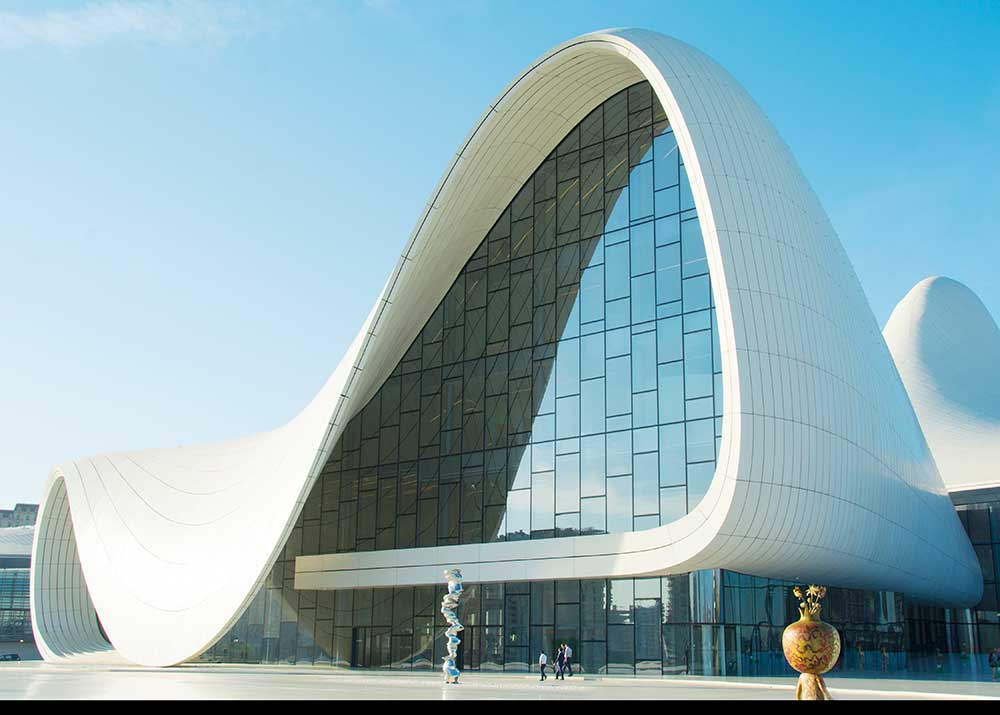
Meanwhile, tools such as Autodesk Forma and Spacemaker are helping architects and engineers analyze site conditions (such as wind, sunlight, noise, density) and generate building design options that respond intelligently to those constraints.
These systems can simulate environmental performance in real time and generate multiple site layouts within minutes, dramatically accelerating the early stages of design.
So, while no building is yet “100% AI-designed,” many projects are already being shaped by machine-assisted decisions. The fingerprints of AI are becoming increasingly evident.
Why the AEC Industry Is Paying Attention
Architecture and engineering have always been influenced by tools. The pencil changed design. CAD changed drafting. BIM changed collaboration. And AI could change the entire creative workflow.
One reason is speed. Generative design systems can evaluate thousands of alternatives in the time it once took to produce a handful.
Generative design helps reduce material waste, optimize energy use and simulate environmental impacts before a shovel ever hits the dirt.
Another reason is performance optimization. AI can simultaneously evaluate competing goals (structural efficiency, daylighting, energy use, views, air circulation) and rapidly propose solutions that balance them in ways humans might not so easily see.
There’s also a sustainability angle. Generative design helps reduce material waste, optimize energy use and simulate environmental impacts before a shovel ever hits the dirt. For an industry under growing pressure to address climate challenges, that capability alone makes AI worth exploring.
And then there’s the simple fact that buildings are becoming more complex. Cities are denser. Regulations are stricter. And data is everywhere.
Who thrives on complexity? AI does.
The Case for Skepticism
But before we crown our new algorithmic overlords, it’s worth acknowledging a few unbiased truths.
- GIGO: You’ve heard of Garbage In, Garbage Out. AI is the same. AI output is only as good as the inputs it receives. If the design constraints are flawed or the goals poorly defined, the algorithm will faithfully produce thousands of bad solutions instead of one good one.
- Human Perspective: AI still struggles with human context. Architecture is not just a design or engineering problem. It’s cultural, emotional, social and often deeply subjective. Buildings shape how people feel in spaces, how communities interact and how cities evolve. Those are difficult qualities to encode into optimization algorithms.

- Man versus Machine: Many AI-generated concepts still require significant human refinement. Architects and engineers often act as translators between computational logic and real-world constructability. For example, AI doesn’t consider a question from the viewpoint of “Could a human being actually physically weld that joint?”
- Legal Liability: In real-world practical terms, there’s an additional barrier to overcome. We’re talking about legal liability. A licensed architect or engineer must stamp drawings. An AI cannot be sued or held legally responsible if a structure fails.
The bottom line is that, for now, AI may suggest a building’s shape, but someone still has to figure out how to actually build the thing.
The Real Transformation: Human + Machine
The most interesting future probably isn’t one where AI replaces architects and engineers. It’s one in which architects and engineers work alongside AI to exponentially amplify human creativity. Think of AI as the ultimate design assistant that can:
- Analyze environmental data instantly.
- Test structural configurations at scale.
- Generate design options faster than any intern (and won’t complain about late nights or demand overtime pay).
But the architect and engineer still provide judgment, taste, cultural awareness and the physical solution to the seemingly impossible dream.
In this hybrid model, the designer’s role becomes less about producing geometry and more about defining intent: setting goals, framing problems and selecting solutions that align with human values.
It’s less “architect & engineer versus AI” and more “architect & engineer plus AI.”
The Client Angle
There’s another reason AI is gaining traction: Clients love options.
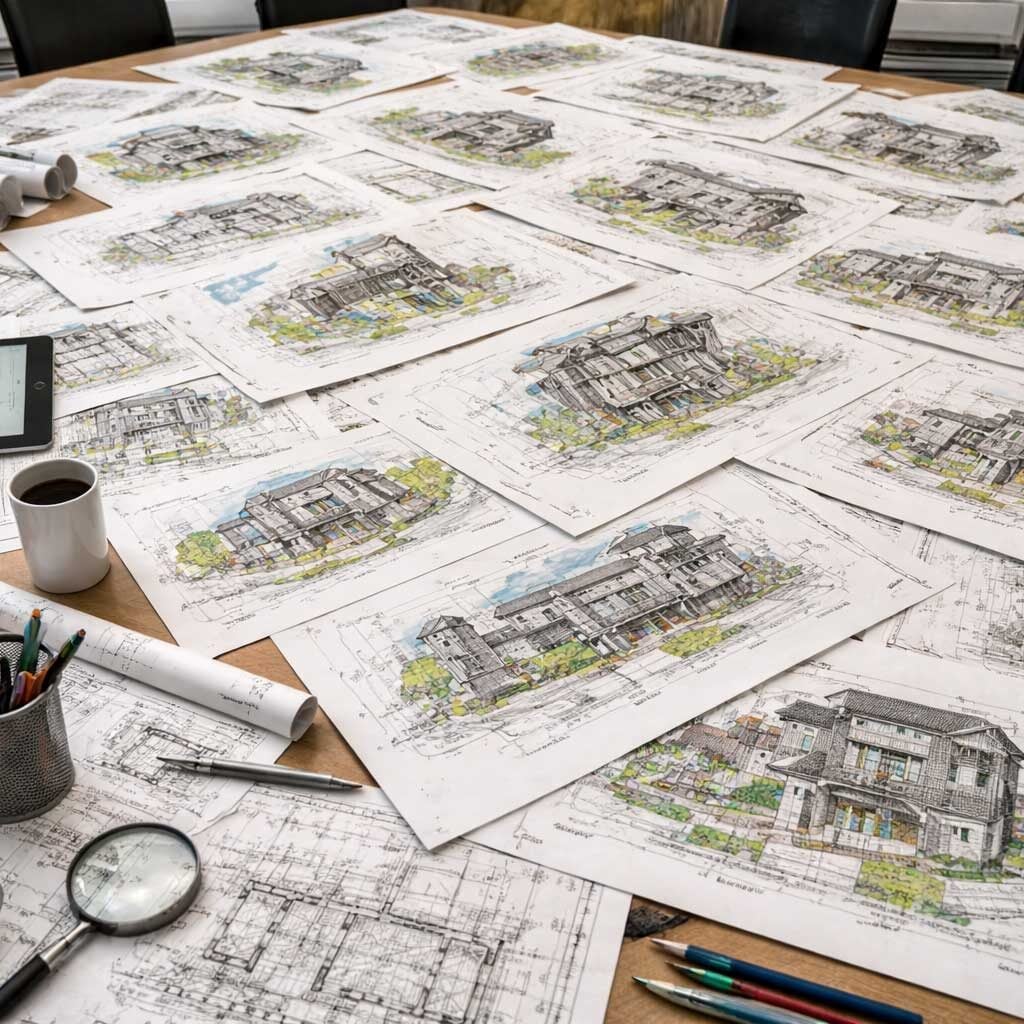
Historically, design presentations might show three concepts. Today, generative tools can visualize dozens of variations quickly: different building forms, façade strategies or site layouts.
Clients suddenly become participants in the exploration process. Instead of reacting to a finished design, they can better engage as the design space unfolds in real time.
Of course, this can also create a potential downside: When you give people 500 options, they sometimes want to review all 500 …
If they haven’t already, architects and engineers will discover soon enough that while AI is excellent at generating ideas, it’s equally excellent at generating decision paralysis. Maybe there’s an AI for that …
So… Hype or Hope?
The honest answer is both.
Some of the hype surrounding “AI-designed buildings” is undeniably exaggerated. We’re not about to see entire cities spontaneously generated by neural networks. But almost no one is dismissing AI as a passing trend, for obvious reasons.
Generative design, machine learning analysis and AI-assisted modeling are already reshaping early-stage design workflows. They’re changing how architects explore possibilities, how engineers optimize systems and how development teams evaluate sites.
These tools are not replacing designers. They’re expanding all the possible computations that designers can see.
If architecture and engineering have always been about “seeing” the future, AI simply gives the industry a vitamin B shot and a new set of lenses.
A New Kind of Architecture
If architecture and engineering have always been about “seeing” the future, AI simply gives the industry a vitamin B shot and a new set of lenses.
The first generation of AI-influenced buildings won’t be designed by machines alone. They’ll be created by teams of humans working with increasingly intelligent tools: tools that help navigate complexity, reveal hidden possibilities and test ideas faster than ever before.
In the end, the most revolutionary thing about AI-designed buildings may not be the algorithms themselves. It may be the architects and engineers who learn how to use them for mankind’s benefit.
Perhaps the future of design isn’t a robot architect or engineer. It’s a human architect or engineer who can suddenly show the client a thousand more ideas, each unique and perfect in its own way.
Architects and engineers needn’t fear AI. But the client? Maybe they’re the ones who should fear AI, because they’re the ones who are potentially going to be spoilt for choice. Decisions, decisions …
